Inside Klas
Inside Klas Restaurant: the Crystal Room, the Murals and the Beer Garden
Six names on a dinner menu. A dining room, a gathering place, and the many lives of one building.
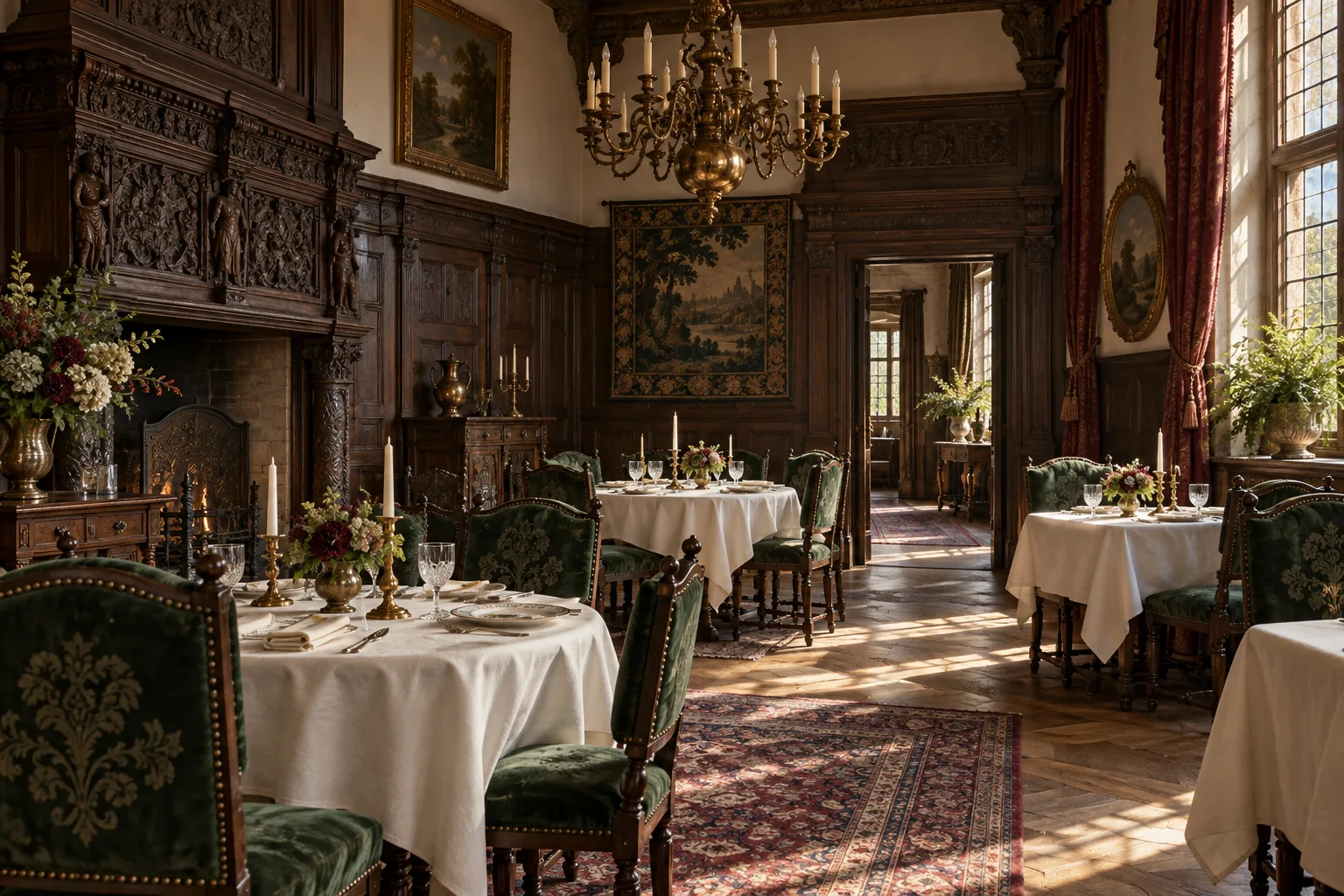
AI-generated · Artistic interpretation, not an archival photograph or a documented reconstruction.
The Crystal Room
The formal room, and the one that appears in most descriptions: coffered dark wood, a chandelier, and wide painted landscapes set into the panelling like windows onto somewhere else.
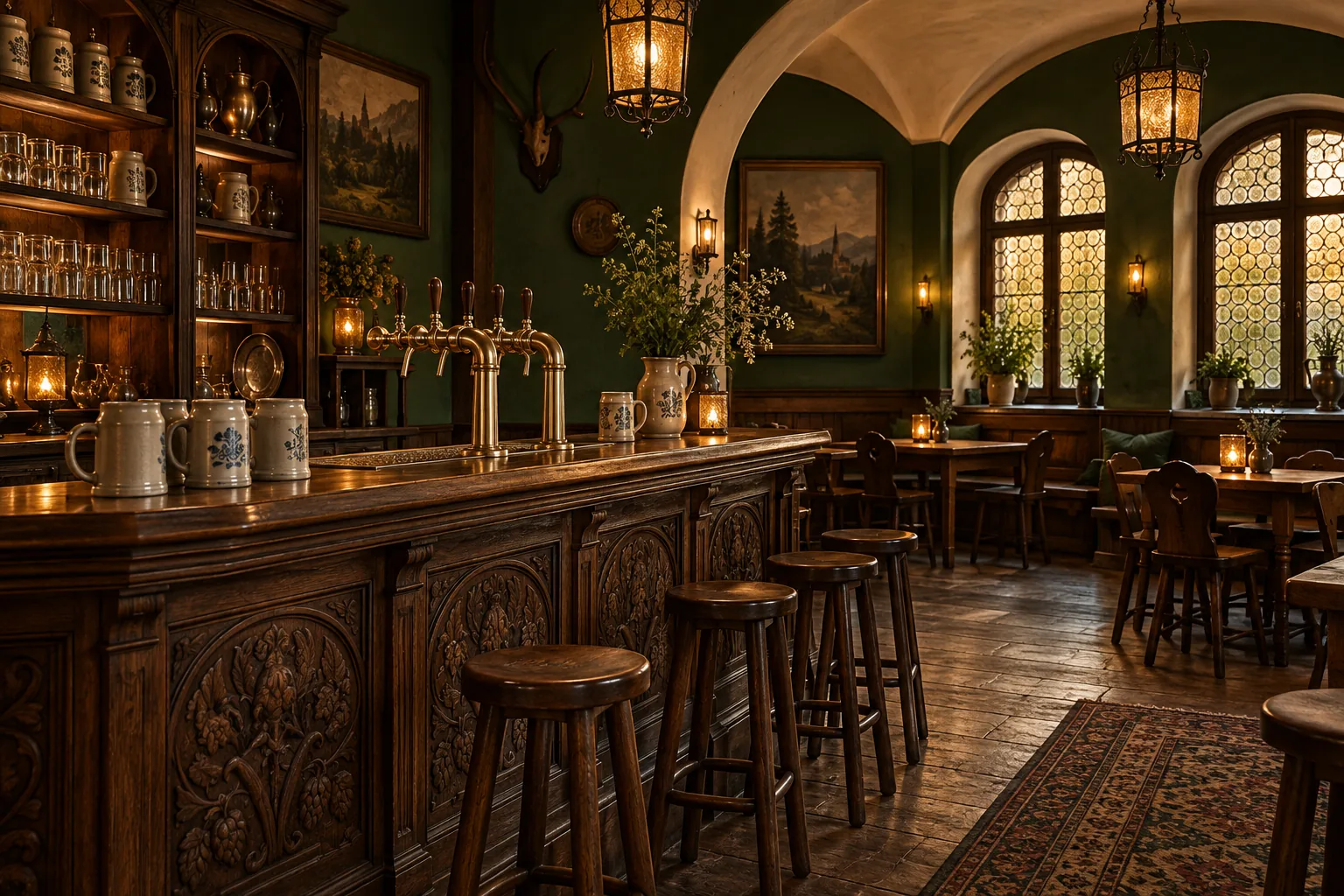
AI-generated · Artistic interpretation, not an archival photograph or a documented reconstruction.
The bar
Open after hours six days a week, according to the menu — which is its own small piece of evidence about who the building belonged to late in the evening.
The six rooms, as the restaurant listed them
- The Fountain Room
- Named for what stood in it.
- The Crystal Room
- The formal dining room, chandeliered and murallled.
- The Moravian Room
- Named for the other half of the country the founders came from.
- The Dr. Zhivago Room
- A Russian room, added later, painted by a decorator the accounts name as Gordeyev.
- The banquet rooms
- Weddings, wakes, receptions and, at least once, a band with a drum kit.
- Klas’ Garden
- The beer garden at the back.
Why a restaurant ends up with six rooms
Not by design. A dining room that survives adds space in the way a house does — a back room becomes a banquet hall, a yard becomes a garden, a disused corner becomes somewhere to put a wedding party. Each addition gets a name because the staff need to say where a booking is, and the names stick. By the end the restaurant was printing the list on its own menu, which is how a building tells you it has stopped being one room.
The names themselves are a record of who the building thought it was for. Moravian, for the other half of the country the founders came from. Dr. Zhivago, a Russian room painted by a decorator the accounts name as Gordeyev, added at some point well after the restaurant's Bohemian beginnings. Crystal, for the chandelier. Fountain, for what stood in it. And Klas' Garden, which is simply the back.
The garden matters more than it sounds. A beer garden is where a Central European restaurant does its ordinary trade in summer, and the menu's note that the bar stayed open after hours six days a week points at a building that was busy long after the kitchen had stopped.
What the fabric was made of
The Crystal Room is described everywhere in the same terms: dark coffered wood, a chandelier, and painted landscapes set into the panelling. That combination is not decorative fashion, it is a specific tradition. Central European dining rooms of the period were built to read as rooms rather than as halls, and panelling that runs to the ceiling with pictures let into it is how a large space is made to feel enclosed without being divided.
Painted work of this kind was ordinary in the immigrant halls of Chicago and its western suburbs. Sokol buildings, parish halls and the larger restaurants all employed decorators to put landscape or genre scenes onto plaster and panel, and the painters moved between commissions. That is the context the Dr. Zhivago room belongs to: a later addition, painted by a decorator the accounts name as Gordeyev, in a building that had been commissioning this sort of work for decades.
A garden is a trading room
Klas' Garden reads on the menu like an afterthought and was not one. In Central Europe the garden is where a restaurant does its summer business: it roughly doubles the covers for four months without adding a single square foot of building, it serves beer faster than a dining room does, and it is where a place gets its reputation for being easy to sit in. An American restaurant with a dining room and no garden closes for the summer in a way a Czech one does not.
The bar deserves the same reading. A room that stays open after hours six days a week is not simply a place to wait for a table; it is a licence being used, a second shift of staff, and a set of customers who came for the room rather than for dinner. The menu prints that detail in one line, and it is one of the few things the documents say directly about how the building was used late in the evening.
On the virtual tours
The restaurant's own website carried virtual tours of these rooms. They were built in Flash, which no browser has run since 2020, and the files themselves are the part of the site that did not survive. There is no way to restore them and no honest way to simulate them, so this page does not pretend to: what is drawn above is an interpretation, and it is labelled as one.
Some of the interior did survive the demolition. Painted work from the Russian room was removed before the building came down.
Questions people ask
How many rooms did Klas have?
Six were named on the back of the dinner menu: the Fountain Room, the Crystal Room, the Moravian Room, the Dr. Zhivago Room, the banquet rooms and Klas’ Garden. The restaurant also ran a bar that stayed open after hours six days a week.
What was the Dr. Zhivago Room?
A Russian room, added well after the restaurant’s Bohemian beginnings and painted by a decorator the accounts name as Gordeyev. Painted work from it was removed before the building was demolished in 2022.
Are there photographs of the interior?
Published photographs exist in press coverage of the closure and the demolition. This site does not reproduce them, because the rights are not ours; the illustrations here are AI-generated artistic interpretations made for this site and are labelled as interpretations.
What happened to the virtual tours?
They were built in Flash. No browser has run Flash since 2020 and the files themselves did not survive. There is no way to restore them and no honest way to simulate them, so this page does not try.
Could you hire the rooms?
Yes. The banquet card priced the hall at four hours, with each additional hour at seventy-five dollars, two entrées at twenty-three dollars a head or three at twenty-five, tax and gratuity included.