The Bohemian table
Bohemian Dumplings, Czech Potato and Bread Dumplings with Sauerkraut
Bread, potatoes, pork and sauerkraut. Explore the dishes behind the menus — culinary traditions, not claimed original Klas recipes.
Houskový knedlík
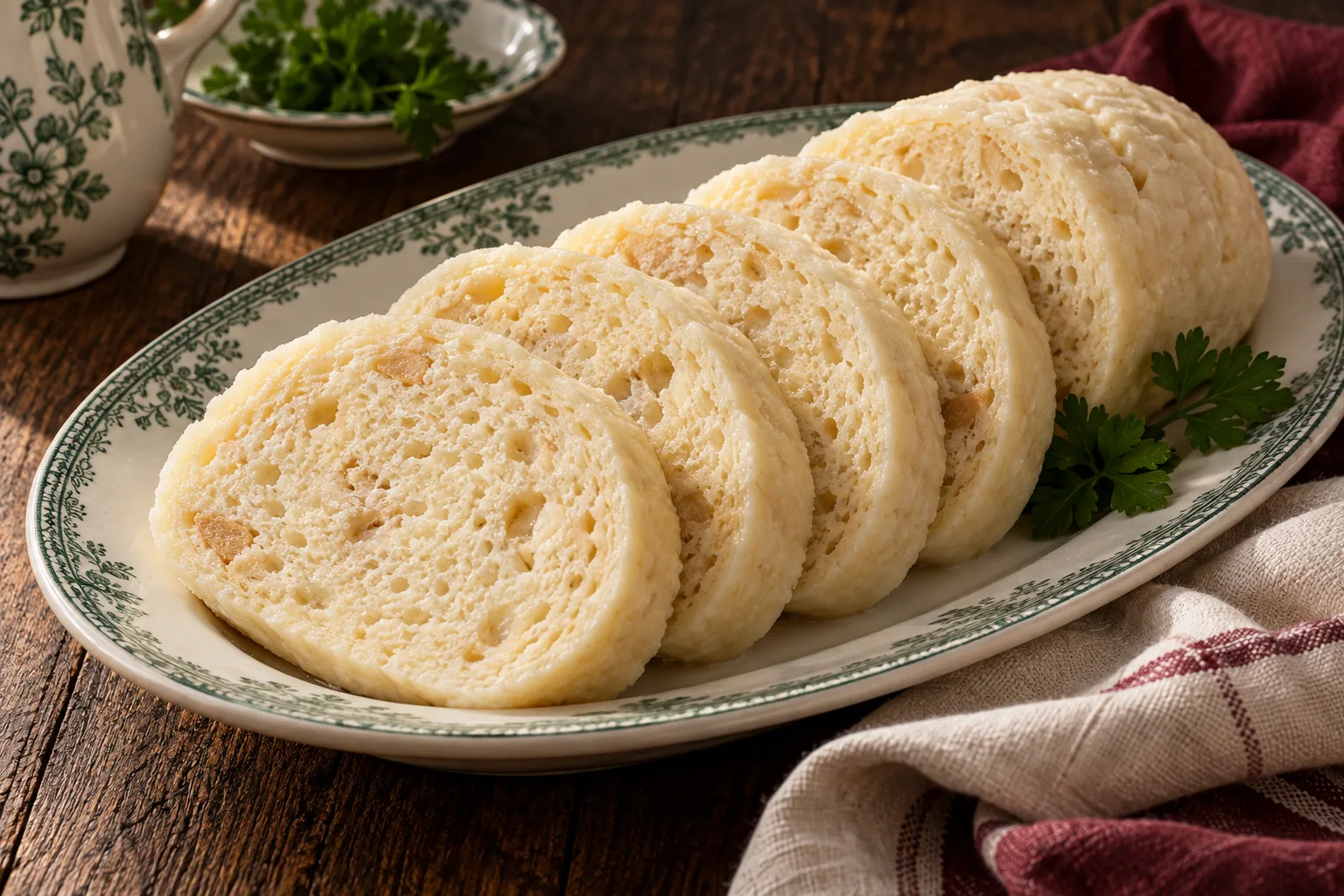
Bohemian dumplings, bread: houskový knedlík
A bread dumpling is not baked and it is not boiled in pieces. The dough — flour, yeast, milk, egg, and cubes of stale roll folded through it — is shaped into a long loaf and steamed whole, then cut into rounds. Traditionally with a thread, not a knife, because a blade drags and compresses the crumb.
The result is soft, faintly sweet and almost weightless, and its job is entirely practical: it exists to carry gravy. On a Klas plate the bohemian bread dumplings sat under the roast pork and soaked up whatever the meat released. The kitchen sold them separately too — a foot and a half of dumpling loaf, five dollars, over the counter.
Bohemian bread dumplings are forgiving in one direction and unforgiving in the other. Too little liquid and the loaf stays dense in the middle; too much and it collapses when the steam comes off. Czech cooks judge it by how the dough pulls away from the bowl, never by any measurement, which is why written recipes for bohemian dumplings vary so widely and why most of them tell you to watch the dough instead of the clock.
Bramborový knedlík
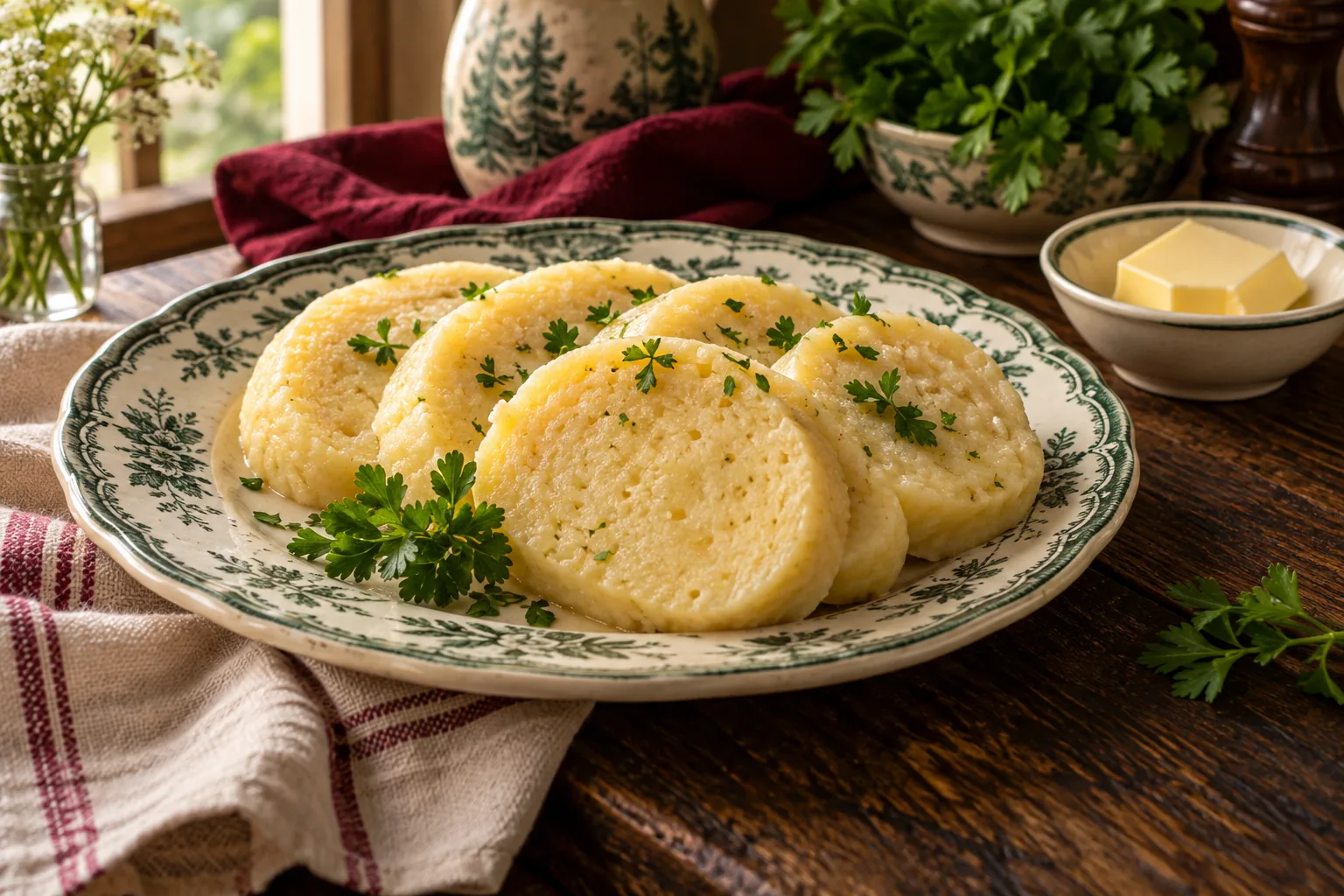
Czech potato dumplings: bramborový knedlík
Czech potato dumplings are the other answer to the same question, and households do not switch between them casually. Cooked potato, raw grated potato, flour and egg, worked quickly and cooked as rounds. They come out denser, slightly grey, and chewier than the bread kind.
Bohemian dumplings of this kind sit at the heart of the plate, where a side dish would sit beside it. Potato dumplings and sauerkraut is the pairing that turns up most often in searches, and it is the right one: the sourness of the kraut needs the heavier dumpling to sit against. With smoked meat it becomes a complete plate without anything else on it.
With bohemian potato dumplings the proportion of raw to cooked potato is the whole argument. More raw potato gives a firmer, greyer dumpling that holds its shape in gravy; more cooked potato gives a softer one that starts to break down. Czech potato dumplings made entirely from cooked potato are a different dish again — the kind rolled around plums or apricots and served sweet, which is where ovocné knedlíky come from. Bohemian potato dumplings made this way turn up on the 2003 menu as fruit dumplings, at 8.95.
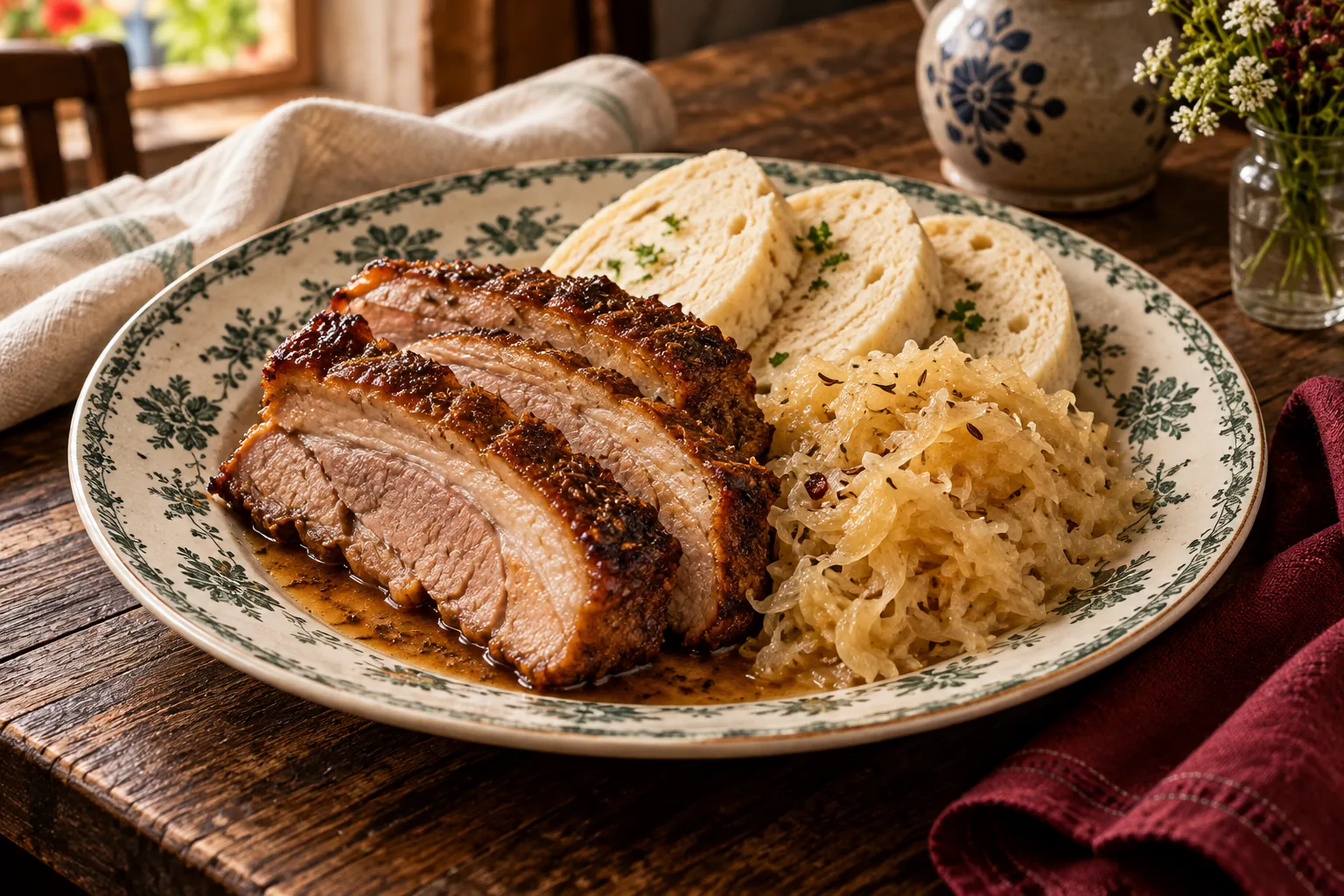
Vepřo knedlo zelo
Roast pork with sauerkraut and dumplings
Of the two kinds of bohemian dumplings, this plate takes the bread one, and potato dumplings and sauerkraut is the combination it is most often confused with.
Roast loin of pork, braised sauerkraut, bread dumplings. The name is three words in Czech and it is effectively the national plate. Pork roast with sauerkraut and dumplings was 10.95 on the 2003 menu and it is the dish the restaurant is remembered for.
The sauerkraut is the variable. Bohemian sauerkraut is usually softened with a little sugar, sometimes thickened, and cooked far longer than the sharp raw kraut most American kitchens mean by the word. Get that wrong and the plate reads as German instead.
Klas cooked the pork as a loin rather than a shoulder, which is the leaner and less forgiving choice, and served it sliced with the gravy spooned over instead of poured around. The 2015 menu lists pork sauerkraut and dumplings twice — once à la carte at sixteen dollars and once as a complete dinner at eleven with soup, two compliments and dessert. That second number is the one most people paid, and pork sauerkraut and dumplings is still the first dish anyone names when the restaurant comes up.
Reading a Czech menu
Reading a Czech menu: the words on the card
Ten terms.
Ninety-four years.
- Houskový knedlík bread dumpling
- Steamed in a roll and cut into rounds. The default side.
- Bramborový knedlík potato dumpling
- Denser, made with raw and cooked potato. The other side.
- Ovocné knedlíky fruit dumplings
- Sweet, filled, served with cinnamon, butter and curd.
- Svíčková marinated beef
- Beef and root vegetables, simmered, under a sour cream gravy.
- Koprová dill gravy
- Boiled beef in a creamy dill sauce. Pale, sharp, divisive.
- Smažený sýr fried cheese
- Breaded and fried cheese, with tartar sauce.
- Topinka fried bread
- Rubbed with garlic. Served under the duck livers.
- Kolácky kolacky
- Sweet pastry with a fruit or curd well. Sold by the baker’s dozen.
- Vepřo knedlo zelo pork, dumpling, kraut
- The three-word name of the national plate.
- Pivo beer
- The list ran Czech first: Pilsner, Staropramen, Radegast, Czechvar.
The pattern behind the glossary is worth naming. Czech cooking names a finished dish after its sauce, not after its meat: svíčková and koprová are both beef, and neither word refers to the beef. English menus reverse that order because an English-speaking guest looks for the protein first, which is why every English Klas card reads as a list of meats and the Czech card of the same year reads as a list of sauces. Both describe the same kitchen.
Questions people ask
What is the difference between bread dumplings and potato dumplings?
Bread dumplings are a yeasted dough with cubes of stale roll folded through it, steamed as a whole loaf and sliced. Potato dumplings are made from a mixture of cooked and raw potato with flour and egg, and are cooked as individual rounds. Bread dumplings are lighter and better at absorbing gravy; potato dumplings are denser and hold up against sauerkraut and smoked meat.
How do you make bohemian potato dumplings?
The method is the same in every household version: grate raw potato and press out the water, mash an equal quantity of cooked potato, combine with flour, egg and salt, work it quickly while still warm, shape into rounds and simmer — never boil hard — for about fifteen minutes. The ratio of raw to cooked potato is what families disagree about, and it is what decides whether the dumpling comes out firm or soft.
What is svíčková?
Beef and root vegetables marinated and then simmered until tender, served under a thick gravy enriched with sour cream. On the 2003 Klas menu it was listed as “pickled beef” at 11.95, which undersells it — the marinade is aromatic rather than sour, and the gravy is strained smooth and usually finished with cream, cranberry and a slice of lemon.
What is koprová, and why is the gravy pale?
Koprová is boiled beef in a dill gravy. The gravy is a white roux loosened with the cooking liquid and finished with cream and a great deal of fresh dill, so it stays pale — the colour of paper, not of a brown sauce. It is one of the dishes that divides people most sharply, and Klas kept it on the menu for decades.
What is vepřo knedlo zelo?
Three words — pork, dumpling, cabbage — and effectively the Czech national plate: roast pork, bread dumplings and braised sauerkraut. Bohemian sauerkraut is cooked long, often softened with a little sugar and sometimes thickened, which makes it quite different from the sharp raw kraut most American recipes mean.
What was a “compliment” on the Klas menu?
The house word for a side. A complete dinner came with soup or salad, two compliments and dessert; further compliments were two dollars each. The list included bread and potato dumplings, sauerkraut, sweet-and-sour cabbage, boiled and mashed potatoes, potato salad, mixed vegetables, green beans and fries.
Can I still eat at Klas?
No. The restaurant closed in 2016 and the building at 5734 West Cermak Road was demolished in 2022. This site is a record of what it was, not a listing for a working business.